
Yayra Agbofah
on Community Wisdom Reviving the Future of Fashion
As a teenager in Ghana, Yayra Agbofah always wanted to look special, but he couldn't afford it.
New outfits were not an option. So he started buying second-hand clothes from Kantamanto Market, re-tailoring them into something uniquely his: "I decided to be stylish in an organic way!"
Guess what? People started feeling inspired. Clothing became his form of self-expression, and Yayra, the influencer, began teaching others to be fashionable on a budget: "Someone's trash became my treasure." He learned a mantra about creativity that would shape his whole life: value is not always found in something new, but can be born through imagination and the ability to sense potential where others don't.
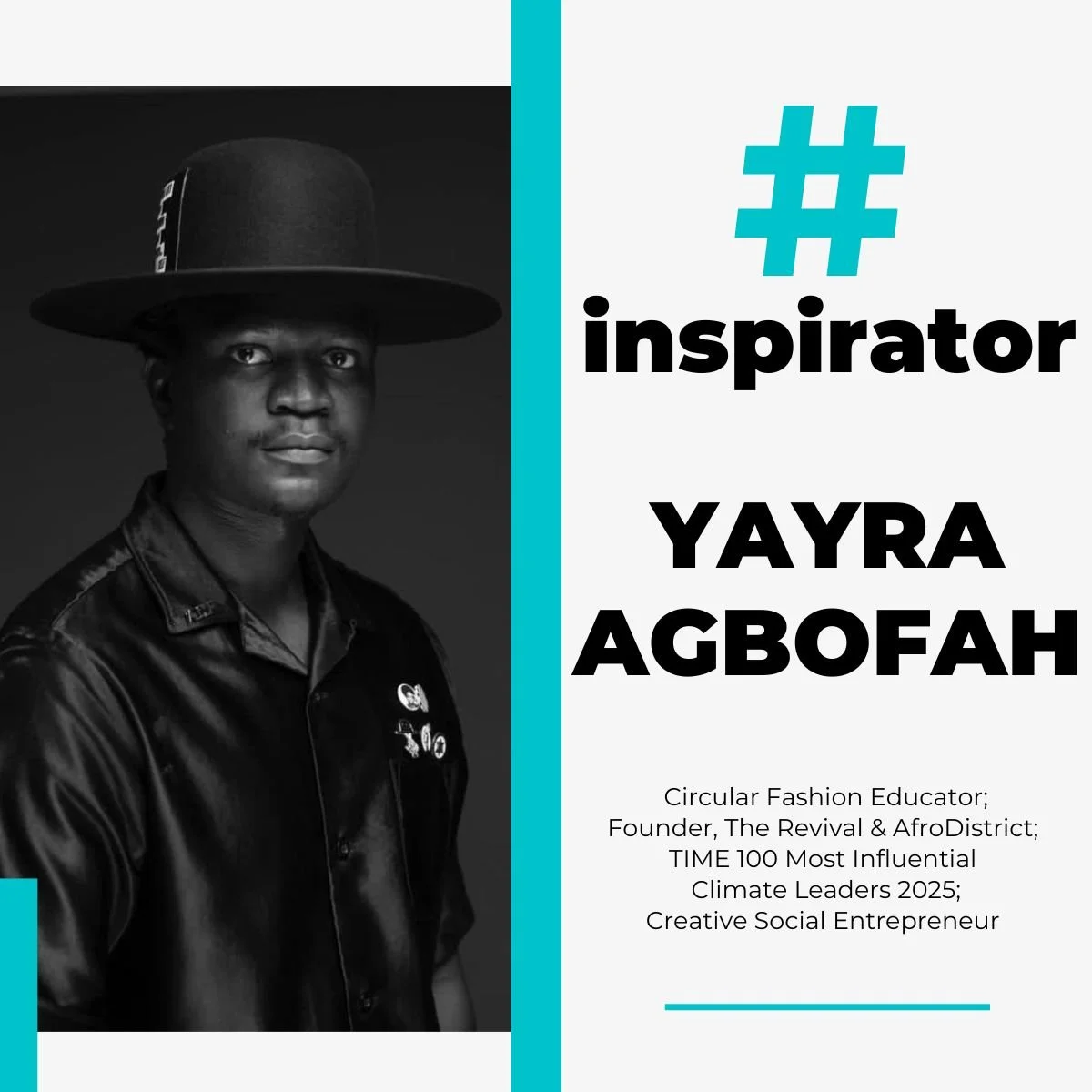
Yayra is now a speaker, creative social entrepreneur, TIME 100 Most Influential Climate Leaders 2025 and founder of THE REVIVAL GHANA, an organisation extending the life of garments through repair, redesign, education, and community action.
Kantamanto Market is the soul of his story! A living ecosystem shaped by traders, tailors, repairers, and young people who have practised circularity out of necessity for generations. Many garments that arrive there have already lived several lives, shipped from around the world under the labels of donation, recycling, or reuse: "There’s so much anger when you’re staring at a giant mountain of discarded clothing. Textile waste is poisoning our environment and destroying beautiful communities." Yayra started obsessing over a question: "Why is it okay to send torn clothes to Africa if you would never wear them yourself?"
This is the most uncomfortable truth about the modern fashion system: the clothes we place in donation bins often disappear from view, so we imagine a happy ending. In reality, a depressing story continues: huge volumes of unwanted clothing end up in places like Kantamanto, where local communities carry the environmental and financial burden of a system they did not create.
But Yayra didn't only notice the decay. He fell in love with the ingenuity, imagination, and resilience of the people working against it. Discarded garments are repaired, reworked, redesigned, and given another chance at life through patience and care: “People don't see the relevance in repair anymore. We're trying to revitalise the idea of ownership."
Regeneration begins with a shift in relationship: "It is not just an ecological process, it's social and cultural. It’s a way of restoring dignity to work, valuing craftsmanship, and recognising the wisdom of communities that have long practised circular ways of living!”
Read Yayra Agbofah's answers for Inspirators, and remember that value can be revived and that care can extend the life of everything!
Thank you, Yayra, for being a Fashion Regenerator!
#INSPIRATORS QUESTIONNAIRE
Name: Yayra Agbofah
Company / Institution: The Revival Earth Organization
Title: Founder & Creative Director
Website: https://www.therevival.earth/
LinkedIn profile: https://www.linkedin.com/in/yayra-agbofah-74ba47b5/
Country of origin: Ghana
Country you currently live in: Ghana
Your definition of Regeneration: For me, regeneration is about restoring balance between people, materials, and the environments that sustain us. It is not simply about reducing harm or making systems slightly less damaging.
Regeneration asks us to rethink how we live, produce, and relate to the world around us.
In places like Kantamanto Market in Accra, regeneration is already practised in everyday ways. Traders, tailors, and designers extend the life of garments through repair, redesign, and reuse. Discarded materials are reintroduced into circulation, and knowledge is passed between generations of makers. Regeneration, therefore, is not only ecological. It is also social and cultural. It is about restoring dignity to work, valuing craftsmanship, and recognising the wisdom within communities that have long practised circular ways of living.
At its heart, regeneration means creating systems that allow life, both human and more than human, to flourish again.
A challenge you are currently navigating in your work: One of the challenges I am currently navigating is how to grow the work of The Revival without losing the community roots that gave birth to it.
Kantamanto Market is a living ecosystem shaped by traders, tailors, repairers, and young creatives who have long practised forms of circularity out of necessity. As global attention around textile waste and circular fashion grows, there are increasing opportunities to collaborate with institutions, brands, and organizations that want to engage with this work.
The challenge is ensuring that these opportunities strengthen the community rather than extract from it. It requires constantly asking difficult questions: Who benefits from these collaborations? Whose knowledge is being recognized? And how do we ensure that the people closest to the problem are also the ones shaping the solutions?
Navigating this tension between local realities and global interest requires patience, listening, and care. It reminds me that true change does not come from scaling ideas alone, but from nurturing relationships and building systems that remain accountable to the communities they serve.
Main driver that keeps you going: What keeps me going is the resilience and creativity of the people I work alongside every day in Kantamanto Market.
Despite the enormous challenges created by the global textile waste crisis, the traders, tailors, and young creatives in the market continue to find ways to repair, redesign, and reimagine what others have discarded. Their ability to transform difficulty into possibility is deeply inspiring. It reminds me that change does not always begin in boardrooms or institutions. Often it begins in communities where people are quietly practicing care, creativity, and resourcefulness.
Seeing this every day gives me a sense of responsibility to ensure that their work, knowledge, and voices are recognised and valued in the global conversations about fashion and sustainability. That responsibility, combined with the hope that a more just and regenerative fashion system is possible, is what continues to drive my work forward.
An ancestral teaching or Indigenous worldview that changed how you see life: One teaching that deeply shaped how I see life comes from a philosophy that is widely shared across many African cultures, the understanding that a person exists through their relationships with others and with the world around them.
Growing up, I often heard expressions that remind us that we are not isolated individuals. Our lives are connected to our communities, to the land, and to the materials we use. This worldview encourages responsibility and care for the systems that sustain us.
Working in Kantamanto Market has made this teaching even more tangible for me. In the market, nothing exists in isolation. A garment passes through many hands before reaching its next life. Traders, tailors, designers, and porters all play a role in keeping materials in circulation. This way of thinking challenges the dominant culture of disposability that exists in much of the global fashion system. Instead of seeing materials as objects to consume and discard, it invites us to see them as part of a shared ecosystem that deserves care and respect.
This teaching continues to guide how I approach my work. It reminds me that regeneration is not only about materials or systems, but about restoring relationships between people, communities, and the environments that sustain us.
A human or more-than-human Inspirator who shaped who you are today: One of the greatest inspirators in my life has been the community of traders, tailors, and makers in Kantamanto Market in Accra.
When I first began spending time in the market, I was struck by the extraordinary creativity and resilience of the people working there. Every week, they face the arrival of enormous volumes of discarded clothing from around the world. Many of these garments are damaged or unsellable, yet the community continues to find ways to repair, redesign, and extend the life of these materials.
Their ingenuity challenged the way I understood fashion, waste, and value. What I witnessed was not simply a market, but a living system of knowledge and craftsmanship. Tailors carefully repair garments that others would throw away. Traders sort through textiles with patience and skill. Young designers experiment with discarded fabrics to create something entirely new.
The people of Kantamanto taught me that innovation does not only come from technology or design studios. It often emerges from communities that have learned to work creatively within limits. Their determination, dignity, and care for materials continue to inspire the work of The Revival and shape how I imagine more regenerative futures for fashion.
The trait you are most proud of in yourself: One trait I am most proud of is persistence.
The work of challenging the global textile waste crisis is complex and often slow. Many of the systems we are trying to transform have existed for decades, and meaningful change requires patience and resilience.
Through my work with The Revival, I have learned that progress rarely happens through one big moment. It is built through small, consistent actions over time. Listening to communities, building trust, experimenting with new ideas, and continuing the work even when obstacles appear.
Persistence allows me to stay committed to the vision even when the path forward is uncertain. It reminds me that transformation is not only about ambition, but also about endurance and care. In many ways, this persistence is something I have learned from the people of Kantamanto Market. Their ability to keep creating value and opportunity in difficult conditions continues to inspire me to keep moving forward.
The trait you most value in others: One trait I deeply value in others is humility.
In the work of transforming complex systems like fashion, humility allows us to listen, learn, and recognise that knowledge exists in many places. It reminds us that solutions do not always come from those with the most visibility or authority, but often from communities and practitioners whose wisdom has long been overlooked.
Working in Kantamanto Market has reinforced this lesson for me. The traders, tailors, and artisans who work there carry an extraordinary depth of knowledge about materials, repair, and reuse. Their skills are rooted in experience and care for the resources around them. Humility creates the space for genuine collaboration. It allows people from different backgrounds to come together, share ideas, and build solutions collectively. In a world that often celebrates individual success, humility reminds us that meaningful change is almost always the result of working together.
Passions & little things that bring you joy: I find joy in simple moments of creativity and connection. Walking through Kantamanto Market early in the morning and seeing traders and tailors begin their work always reminds me of the resilience and ingenuity of the community.
I also enjoy the process of transformation. Watching a discarded garment take on new life through repair or redesign is deeply satisfying. Outside of work, spending time with family and friends, listening to music, and sharing stories are the small moments that keep me grounded and inspired.
A meaningful place to start for those at the beginning of the regeneration journey: A meaningful place to begin is by learning to see value where others see waste.
Regeneration often starts with paying attention to the materials, communities, and knowledge that already exist around us. In places like Kantamanto Market, people have long practiced repair, reuse, and resourcefulness as part of everyday life. Listening to these practices with humility can shift how we understand design, consumption, and care. From there, regeneration becomes less about inventing new solutions and more about strengthening the systems and relationships that already sustain life.
Most used and abused clichés in sustainability that bother you: One cliché that often bothers me is the idea that sustainability can be achieved through simple consumer choices alone.
While individual responsibility matters, this narrative can distract from the deeper systemic issues within industries like fashion. Overproduction, waste exports, and unequal global supply chains cannot be solved simply by encouraging people to buy slightly better products.
Another phrase that is often repeated is circular fashion, used as a buzzword without acknowledging the communities that have practiced repair, reuse, and material care for generations. True sustainability requires more than new terminology. It requires confronting uncomfortable truths and learning from the people who have long been practicing resourcefulness and care out of necessity.
An honest piece of advice for young people who lose hope: It is natural to feel overwhelmed by the challenges we face today. My advice is to begin with what is around you and what is within your reach.
Meaningful change rarely starts with grand solutions. It often begins with small actions, curiosity, and the courage to care about something deeply. Look for the people and communities who are already creating alternatives and learn from them. Working together with others can transform frustration into purpose and remind us that even small efforts can contribute to a much larger shift.
Must-read books that had a great impact on you: I am deeply influenced by African writers whose work reflects on culture, history, and our relationship with community and the land.
· Things Fall Apart by Chinua Achebe shaped my understanding of how culture, knowledge, and identity can be disrupted and reclaimed.
· Homegoing by Yaa Gyasi offered a powerful reflection on memory, history, and the long lasting impacts of colonialism and displacement.
· I am also inspired by Decolonising the Mind by Ngũgĩ wa Thiong’o, which challenges how language and culture shape our understanding of the world and encourages us to reclaim our own narratives.
· More recently, works such as The Radiance of the King by Camara Laye and the essays of Wangari Maathai have deepened my appreciation for African perspectives on stewardship, community, and our relationship with nature.
These voices continue to influence how I think about regeneration, culture, and the future we are shaping.
Movies or documentaries you love: I am often drawn to films and documentaries that explore culture, identity, and our relationship with the planet. The Boy Who Harnessed the Wind is one that stayed with me. It tells a powerful story of ingenuity and resilience rooted in community knowledge.
I also deeply appreciate documentaries like The True Cost, which exposes the hidden realities of the global fashion industry, and Anote’s Ark, which reflects on climate justice and the human dimensions of environmental change. These stories remind me that creativity, courage, and collective action are essential in imagining more just and regenerative futures.
Websites or podcasts you visit frequently: Because of the pace of my work, I rarely get the chance to listen to podcasts as often as I would like. Most of my time is spent on the ground in Kantamanto Market working with the community. When I do have the opportunity, I enjoy platforms that explore culture, creativity, and systems change. I often read publications such as The Conversation and Africa Is a Country, which offer thoughtful perspectives on society and global issues.
Occasionally, I listen to podcasts like How to Save a Planet or conversations around the future of fashion and sustainability. These moments help me stay connected to broader discussions about regeneration, culture, and the evolving role of fashion in society.
Music that makes you (and your heart) sing: Music has always been a source of energy and grounding for me. I enjoy the richness of African sounds, from highlife and Afrobeat to soulful contemporary artists who blend tradition with new rhythms.
Artists like M.anifest, Fela Kuti, Ebo Taylor, and Bob Marley often find their way into my playlists, along with quieter moments of instrumental music that allow space to think and reflect. Music has a way of bringing people together, and for me it is both a source of joy and a reminder of the cultural roots that continue to inspire my work.
Places you travelled to that left a mark on you: Certain places have stayed with me because of the people and stories they hold.
Kantamanto Market in Accra continues to shape how I see the world. Being present there has revealed the resilience, creativity, and collective intelligence that communities develop when faced with global challenges like textile waste. Travelling to other cities and markets across Africa has also deepened my understanding of how local knowledge and craftsmanship sustain entire ecosystems of making and repair. These experiences constantly remind me that some of the most powerful lessons about regeneration and community are found in everyday places.
Global Regenerative Voices we should follow: There are many inspiring voices around the world who are helping us rethink our relationship with nature, culture, and systems.
Thinkers like Wangari Maathai, whose work reminds us of the deep connection between ecological restoration and community empowerment, and Vandana Shiva, who continues to advocate for biodiversity and food sovereignty.
I also admire voices such as Daniel Christian Wahl and Kate Raworth, who encourage us to imagine economic and design systems that support life rather than exploit it.
Equally important are the countless community leaders, artisans, and grassroots innovators around the world whose everyday practices of repair, stewardship, and care embody regeneration long before it became a global conversation.
Trends in Regeneration we should keep an eye on: One trend I find encouraging is the renewed attention being given to repair, reuse, and care for materials. These practices have existed in many communities for generations, yet they are now being rediscovered as essential parts of a regenerative future.
I am also inspired by the growing interest in community-driven solutions. When designers, artisans, and local makers work together, new ideas emerge that are often more grounded and resilient than solutions created in isolation.
Another important shift is the recognition that regeneration is not only about the environment. It is also about restoring dignity to work, supporting local economies, and strengthening the relationships between people, materials, and the places they live.
Events or gatherings we should attend for inspiration: I find inspiration in gatherings where people from different disciplines come together to share ideas and challenge each other’s thinking. Spaces like ChangeNOW, Global Fashion Summit, and What Design Can Do are powerful because they bring together designers, activists, researchers, and community leaders who are all trying to imagine better systems.
But some of the most meaningful inspiration also comes from smaller and more local gatherings. Workshops, maker spaces, community markets, and collaborative studios often hold conversations that feel closer to real life and everyday practice.These spaces remind us that inspiration does not only come from large stages, but also from people working together, sharing skills, and building new ideas collectively.
Educational resources or courses you recommend: I often encourage people to explore learning experiences that connect theory with real world practice. Courses that explore circular design, systems thinking, and regenerative approaches to materials can be very helpful for understanding the bigger picture.
I also believe some of the most valuable learning happens outside traditional classrooms. Spending time with artisans, makers, and communities who work closely with materials can offer insights that books or lectures alone cannot provide. For me, education becomes most powerful when curiosity is combined with hands-on experience and a willingness to learn from different cultures and ways of working.
Reasons to feel optimistic about our future: What gives me optimism is the growing number of people who are beginning to question the systems we once accepted as normal. Around the world, young designers, activists, and community leaders are imagining different ways of living, producing, and caring for the planet.
I also find hope in the resilience of communities. In places like Kantamanto Market, people continue to repair, reuse, and create value from what others discard. These everyday acts of creativity and care remind me that alternatives already exist. When curiosity, collaboration, and courage come together, they open the possibility for more regenerative and compassionate futures.
Reasons to feel pessimistic about our future: What concerns me most is how slowly many of our systems are changing despite the urgency of the challenges we face. In industries like fashion, overproduction and waste continue at a scale that the planet and many communities can no longer sustain.
I also worry about the distance that often exists between those who benefit from global systems and those who carry their consequences. Places like Kantamanto receive the impact of decisions made far away, and these realities are still not fully acknowledged. At times it can feel overwhelming. But recognising these difficult truths is also necessary, because it pushes us to question existing models and imagine more responsible ways of living and creating.
Regenerative Leadership values much needed today: One value I believe is essential is humility. Regenerative leadership requires the ability to listen and to recognise that knowledge exists in many places, especially within communities that have long practiced ways of living in balance with their environments.
Another important value is responsibility. Leaders must be willing to look honestly at the systems they are part of and take accountability for the impacts those systems have on people and the planet. Finally, care is fundamental. Regenerative leadership is not only about strategy or innovation. It is about nurturing relationships between people, materials, and the ecosystems that sustain life.
The Inspirator(s) you are endorsing for a future edition: I would love to see more recognition given to the everyday innovators working in places like Kantamanto Market in Accra. The traders, tailors, and artisans there have developed remarkable systems of repair, reuse, and material care that keep enormous volumes of clothing in circulation.
Their work is often overlooked in global conversations about sustainability, yet their knowledge represents one of the most practical examples of circular and regenerative thinking in action. Highlighting these voices would not only honor their ingenuity but also help shift the narrative toward learning from communities that have long practiced resourcefulness, creativity, and resilience.
The quote that inspires you: One quote that has always stayed with me is by Wangari Maathai:
"It's the little things citizens do. That's what will make the difference. My little thing is planting trees."
This quote reminds me that meaningful change often begins with small, consistent actions. Whether it is repairing a garment, rethinking how we design, or supporting community knowledge, these seemingly small acts can collectively transform systems over time.
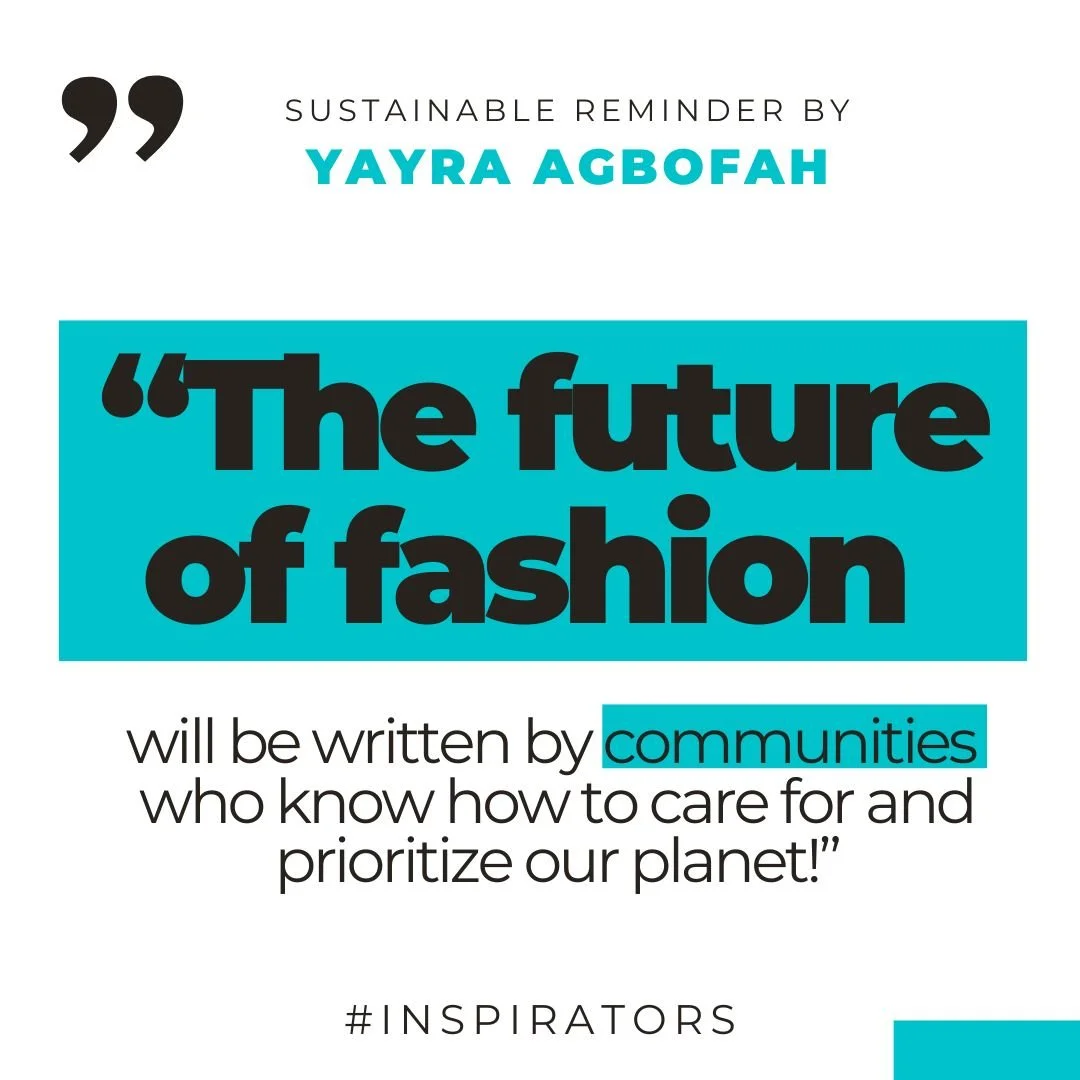
Your quote that will inspire us: