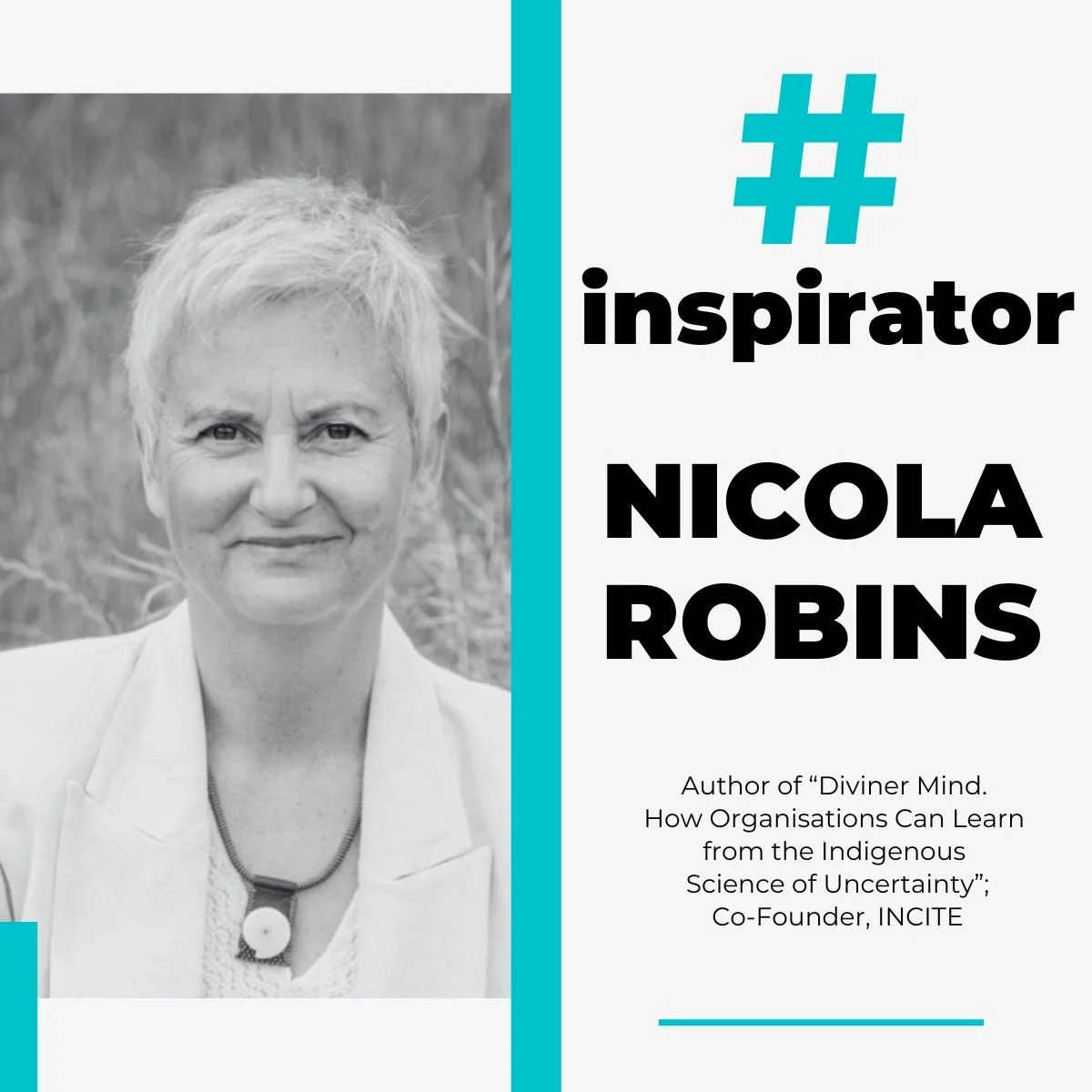
Nicola Robins
on the Diviner Mind
D Ī V Ī N Ā R E.
To foresee.
A paradox sits at the heart of modern life: the more we try to make the future certain, the more uncertainty grows.
Long before this age of metrics, divination emerged as a way of navigating the unknown. Surprise: it required no superstition, was never about absolute truth, but about orientation, or finding the next step in a world that refused to be fully knowable.
In many Indigenous African societies, divination was not a private act of fortune-telling but a collective process of knowledge-making: “In the Ngoma tradition, diviners cast bones to read the pattern between past and future, human and more-than-human, visible and invisible.” Not to provide answers, but to help the community make sense. The diviner was the cognitive custodian of collective understanding, at the threshold between worlds.
This complexity literacy was the missing link that brought Nicola Robins’s story full circle, or as Indigenous elders would say, a Coming Home.
An author and co-founder of Incite, she helps people rekindle natural skills for navigating uncertainty. Her journey began two decades ago, in a diamond mine in Australia, where she first heard the voice of the spirits. Returning to South Africa, her scientific mind spiralled. The dominant culture offered diagnosis and treatment for depression. Indigenous wisdom offered another frame: “What I was experiencing was not treated as illness (something that has gone wrong), but as calling sickness (something that has not yet been properly held).”
It was not something to be suppressed, but witnessed. Something that wanted to emerge but had no structure: “After the ritual facilitation, my symptoms resolved. Not because belief replaced belief, but because the experience was held as a systemic transition rather than an individual fault.”
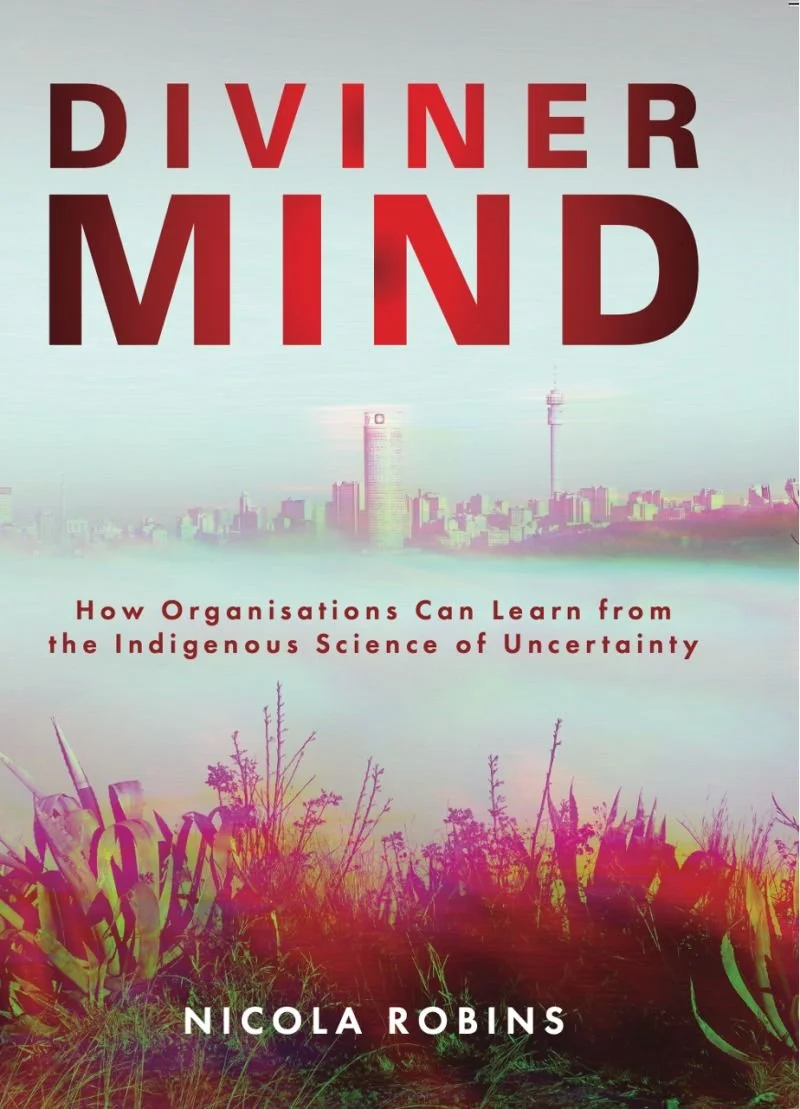
Healing carried an obligation to bring this into business, where uncertainty is rarely seen as an invitation to sense. She wrote Diviner Mind to explore how life wovens with spirits. In many Indigenous Knowledge Systems, spirits are not metaphors, but presences in a living ecology inhabiting mountains, rivers, dreams, memory, ancestry, and us.
The modern world tends to domesticate this wisdom by justifying that “Western science is finally discovering what Indigenous people knew all along.” Nicola warns that while this sounds respectful, it repeats a colonial gesture: flattening difference until it no longer threatens our frameworks: “Rediscovery becomes assimilation dressed up as appreciation. The real opportunity lies in the difference, in the Isivalo, the productive tension where each system is humbled by the other as each is held in integrity. When we honour the difference, the cognitive ecology becomes richer.”
Read Nicola’s answers to Inspirators and remember: “Divination is trained intuition!
Thank you, Nicola, for your Diviner Mind!
#INSPIRATORS QUESTIONNAIRE
Name: Nicola Robins
Company / Institution: INCITE
Title: Co-Founder
Website: www.incite.co.za; also www.divinermind.com (website of my book)
LinkedIn profile: www.linkedin.com/in/nicola-robins-798b974
Country of origin: South Africa
Country you currently live in: South Africa
Your definition of Regeneration: Aligning action with life.
Main business challenge you face: Given the mainstreaming of sustainability and many similar concepts, how do we keep clear on what differentiates practice that aligns with life?
Main driver that keeps you going: Love.
The trait you are most proud of in yourself: The ability to be with most people.
The trait you most value in others: Their openness to being with me.
Passions & little things that bring you joy: My daughter. People. Nature. Africa.
The Inspirators who determined you to take the regenerative path:
Niall Campbell and his vast network of Indigenous African mentors.
A starting point for companies or professionals that are beginning the regeneration journey: Understand the present; explore your history.
Most used and abused clichés in sustainability that bother you: People, planet, profit
An honest piece of advice for young people who lose hope: Look again!
Books that had a great impact on you / Must-Reads for any regenerative professional:
I Write What I Like & Anthropology by Steve Biko
Movies / Documentaries you would watch all over again: The Great Dance: A Hunter’s Story.
Websites / Podcasts you visit frequently: The Great Simplification; Love & Philosophy; Planet Critical.
Music that makes you (and your heart) sing: African drums and singing, in ceremony.
Places you travelled to that left a mark on you: Argyle Diamond Mine, Australia.
Global Regenerative Voices you recommend us to follow:
· Niall Campbell;
· Panashe Chigumadzi;
· Vusumzi Ngxande (although I don’t think they’d see themselves as “regenerative”)
Trends in Regeneration we should keep an eye on: Green Colonialism; AI.
Events we should attend / Best places for networking (online or offline): Wherever you are!
Impactful and relevant Sustainable Development or Regeneration courses or certifications: The Cynefin Co Methods Marathon.
Reasons to feel optimistic about our future in 2030: It’s not possible to know it!
Reasons to feel pessimistic about our future in 2030: Same reason!
Regenerative Leadership qualities much needed today: The impulse to doubt the value of explicit leadership qualities.
The Inspirator(s) you are endorsing for a future edition:
Niall Campbell
The quote that inspires you:
"The great powers of the world may have done wonders in giving the world an industrial and military look, but the great gift still has to come from Africa." (Steve Bantu Biko)
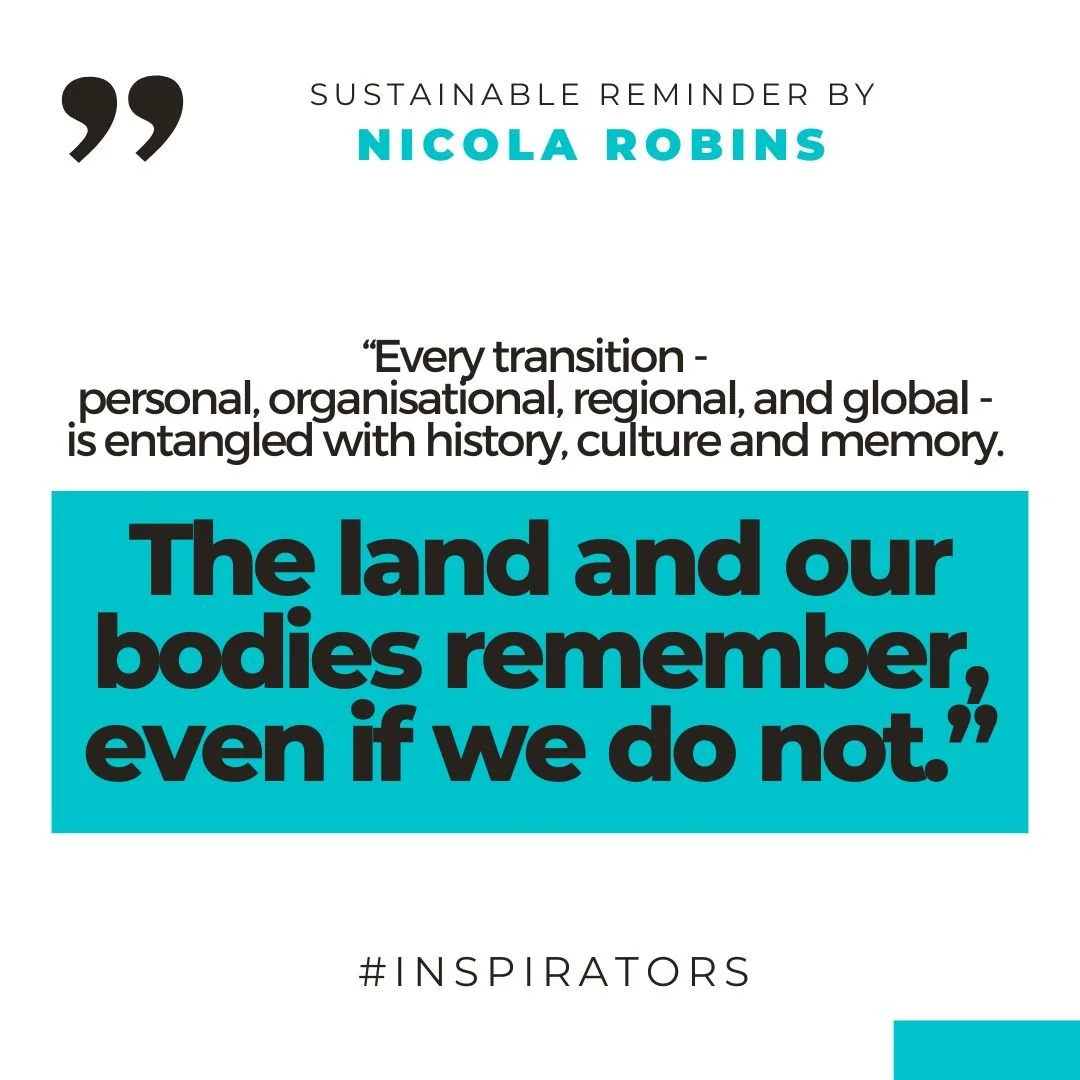
Your quote that will inspire us: