
Marina Cantacuzino
on the Demystifying of Forgiveness, the F-Word
What's your relationship with the F-Word?
F for Forgiveness, an intriguing idea that can either inspire or insult.
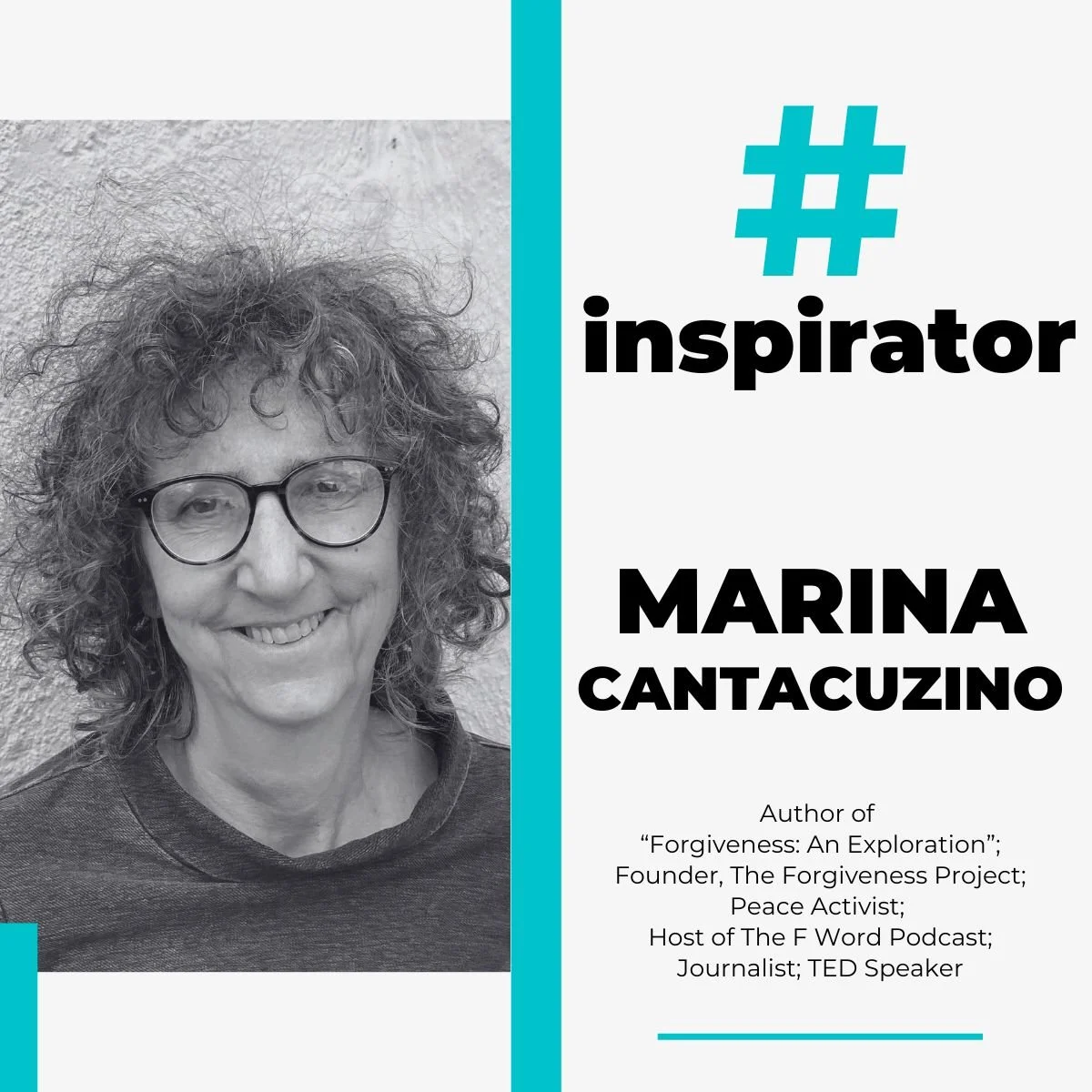
Marina Cantacuzino has spent years asking this question around the world. It became the starting point for The F Word: Stories of Forgiveness, an exhibition born as a response to the language of division surrounding the invasion of Iraq. But beneath that, something more intimate was unfolding: her attempt to understand her Romanian roots, her unresolved trauma, and the ways her ancestors survived without allowing pain to poison everything around them.
Marina gathers stories of humans who have experienced violence, murder, terrorism, and genocide, and who have found ways to move beyond vengeance. It's her way of exploring what becomes possible when people refuse to let perpetrators define their future and interrupt cycles of retaliation.
She is an author, broadcaster, and peace activist who has worked as a journalist for The Guardian and Huffington Post. Her relationship with forgiveness connects to her grandfather, the Romanian architect and writer George M. Cantacuzino, who was tortured, persecuted and separated from his family by the Communist regime. This man, whom Marina never met, became a myth she both admired and questioned: "When trauma goes unresolved, it crosses from one generation to the next."
What did she inherit from all this? Stories of loss, of how political decisions fracture families, and a belief that the past shapes who we become. But mostly, a big question: What do we do with suffering?
The support of late social activist Anita Roddick changed the course of her life: "I still hold on to her words: kindness should be deliberate, bold and aggressive, active and alive." It led her to found The Forgiveness Project, a charity curating stories of forgiveness in the face of atrocity.
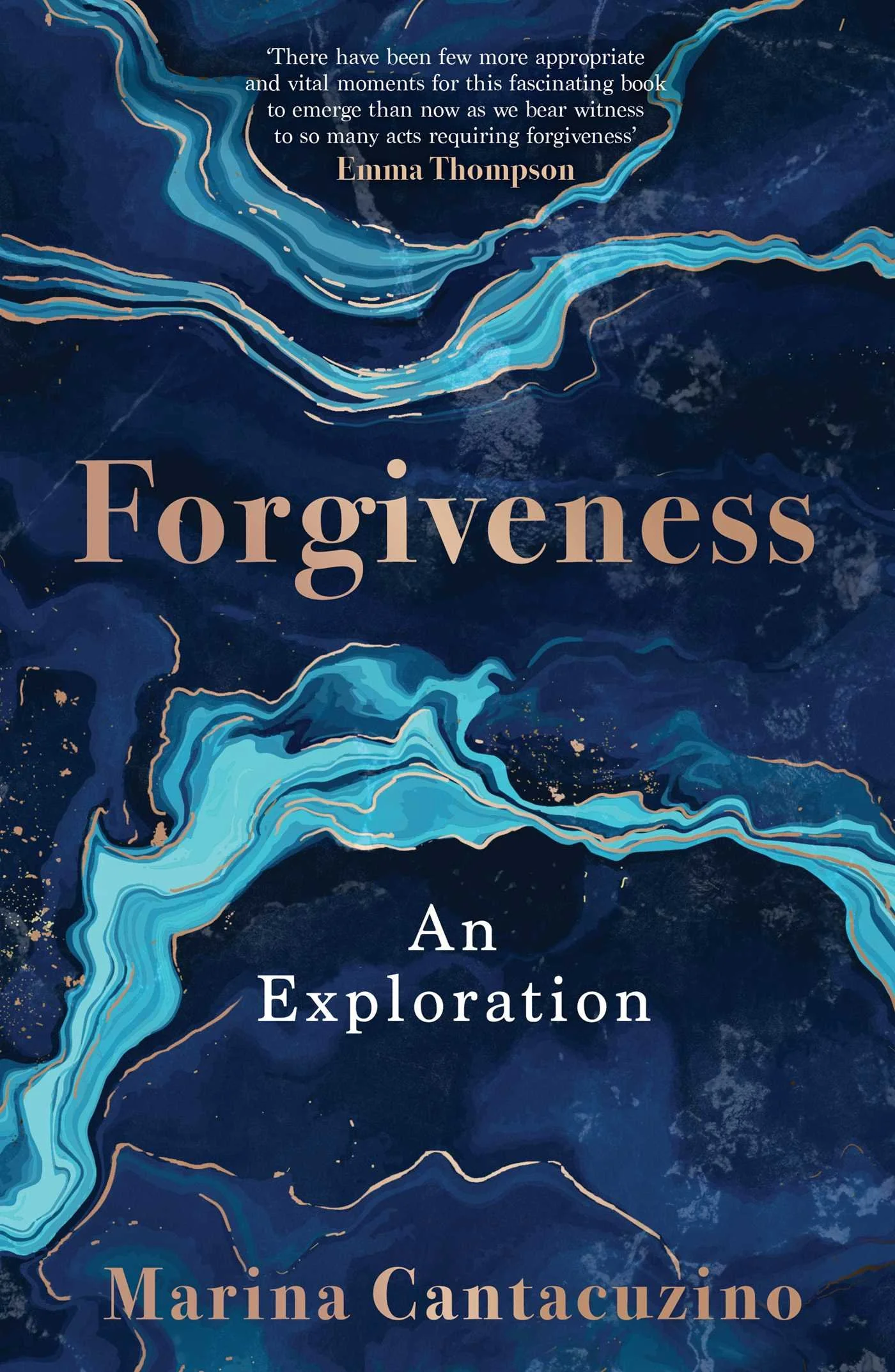
In her book, Forgiveness: An Exploration, she reflects on this complexity. Not everyone will forgive, and expecting them to is unhelpful: "Radical forgiveness is really difficult and too prescriptive. It makes people feel bad if they can't." Her own understanding continues to evolve: "To me, it means freedom and compassionate empathy, an ability to move beyond your own moral circle. True empathy means being able to walk in almost anyone's shoes, no matter how dirty or ill-fitting they may be."
Regeneration, for Marina, is an innate capacity to be reborn, refocused, restored, or released, "the antidote to inflexible opinion, toxic othering and binary narratives." It begins within: "If you want to quieten the demons, start by accepting your bruised ego as part of yourself. The remedy for self-blame is self-discovery. It's impossible to forgive without examining yourself."
Read Marina's answers for Inspirators and embrace the difficult, yet nourishing gift of forgiveness.
Thank you, Marina, for being a Forgiveness Ambassador!
#INSPIRATORS QUESTIONNAIRE
Name: Marina Cantacuzino
Company / Institution: The Forgiveness Project
Title: Founder of The Forgiveness Project, author, broadcaster, clean air campaigner.
Website: www.theforgivenessproject.com
LinkedIn profile: https://www.linkedin.com/in/marinacantacuzino/
Country of origin: UK
Country you currently live in: UK
Your definition of Regeneration: My definition of regeneration is very broad. It is a sense that anyone can change and be reborn, refocused, restored or released. It is the antidote to inflexible opinion, toxic othering and binary narratives. It imbues a sense of possibility and open doors.
A challenge you are currently navigating in your work: My work with forgiveness pulls me in many directions. In one week, we will get multiple requests for partnership, for instance, a hospice, a criminal justice campaign group and a school.
We have thought long and hard about what makes a good partnership. What is true collaboration? There has to be a benefit for all involved, and the ability to listen to each other. Sometimes, people want to piggyback on our work or find a platform for their own work. Other times, there is a real, true sense of alignment. I’m always looking for alignment to seed and grow peaceful solutions to conflict.
Main driver that keeps you going: Today’s intolerant climate. I know that the qualities of empathy, compassion, kindness and forgiveness are still robust within humanity, but too often these qualities get drowned out by the seemingly stronger, certainly louder, qualities of hate, judgment and othering which seem to take up all the oxygen.
An ancestral teaching or Indigenous worldview that changed how you see life:
The South African quality of ubuntu.
This is a term most people will know and means that a person is a human precisely because of being enveloped in the community of others. It is a philosophy of humanism rather than victimization. But what I particularly like is how ubuntu frames forgiveness and justice. So, for people in South Africa or those who have an ubuntu mindset, you don’t ask for forgiveness. You ask for peace. Immediately, therefore, you lose the occasionally condescending aspect of forgiveness, which creates an ‘us versus them’ dynamic. Instead of forgiveness, you are asking someone to build something back together with you. Thus, there is an immediate sense of interconnectivity and togetherness. This is a place to plant seeds for a better future.
Ubuntu forgiveness is a forgiveness that heals not only the individual but also brings peace to the community.
A human or more-than-human Inspirator who shaped who you are today:
The late Anita Roddick, founder of the Body Shop, and a social activist.
In 2003, she saw the forgiveness testimonies I’d collected from people all over the world, and she was so moved by them that she agreed to fund the stories to become an exhibition which I called The F Word, as by now I knew forgiveness was a highly contentious subject – inspiring some while affronting others. Her action changed the course of my life and meant that I have worked in this field for the past 21 years. She was a pioneer and once said "Kindness should not be random; kindness should be deliberate and bold and aggressive. Real kindness is active and alive." I hold on to these words, which guide me forward.
The trait you are most proud of in yourself: Humility. I smiled as I wrote this because it feels somewhat lacking in humility to recognize this trait in yourself! But others have used this word when describing me. I would also equate humility with a certain shyness or lack of confidence, which I certainly have. But I wouldn’t say I’m ‘proud’ of my humility, I would just say I’m glad I have this quality as it keeps me grounded.
The trait you most value in others: Empathy. And when I say empathy, I mean the ability to move beyond your own moral circle and people like you, because it’s so much easier to empathize with our own tribe. True empathy is the ability to walk in almost anyone’s shoes, no matter how dirty or ill-fitting those shoes may be.
Passions & little things that bring you joy: Increasingly – and this seems a true trait of ageing – nature brings me joy. I never used to find it this way. I was a city girl who didn’t notice the flowers and found the sea alarming. Nowadays I love nothing more than the quiet of open landscape and cold water swimming - whether a sea, a lake or a pond. Ever since lockdown, I have found myself acutely sensitive to the noise of traffic and have become so aware of the harm of the car industrial complex. Therefore, I’ve come to abhor the sight of nearly every vehicle I see – knowing how they’ve infiltrated our lives and streets, not to mention the damage they are doing to our planet and ourselves.
A meaningful place to start for those at the beginning of the regeneration journey:
For clarity, I’m thinking of a regeneration journey in terms of a personal process of reconciling with harm or unresolved pain, letting go, and moving forward in your life. A meaningful start may be with your immediate environment, your family, and most of all yourself. If you want to lay the ghosts or quieten the demons, a place to start is to accept our bruised ego as part of ourselves. The antidote to self-blame is self-compassion, accountability and above all self-awareness. Richard Rohr wisely said that “If we do not transform our pain, we will most assuredly transmit it.”
An honest piece of advice for young people who lose hope: There is an immutable law that everything can and will change. The struggle for justice should never be abandoned because history shows that those who wield the power, who seem invincible, will eventually become vulnerable to a force greater than greed and that this can unfold through activism, the arts, community courage, and organization of many kinds. The change doesn’t necessarily mean that everything will then be OK or that we swing back to how it was before, but it signifies growth and transformation. After all, the lotus flower buds and blooms in stagnant swamps, and human beings are eminently adaptable.
Must-read books that had a great impact on you:
· Unattended Sorrow by Stephen Levine. It’s a hugely hopeful book about loss and grief. I have a whole section of my bookshelf dedicated to books on death, dying, loss and grief, and this is the book I return to most regularly. There’s also an entire chapter in there about forgiveness!
· If you Sit Very Still by Marian Partington. This is a stunning, beautifully written book about the most despicable of crimes - the savage kidnapping and murder of Partington’s younger sister, Lucy. I was so moved by this memoir because of the strength of the writing and the author’s paradigm-shifting insights. The great accomplishment of this narrative of healing is its capacity to uncover the gift in the wound, which, to paraphrase WB Yeats, permits “a terrible beauty” to be born.
Movies or documentaries you love: This Happy Breed by David Lean (available on YouTube). It’s a 1944 classic film, set in London between the two world wars. Fundamentally, it is the portrait of a family (about love, convention and family estrangements), and what I love about it is that it provides a window into Britain in the 1930s, which in many ways (with the rise of fascism) is still so relevant today. It also gave me insight into forgiveness.
In the film, the mother of the family becomes enraged when she discovers that her daughter has run off with a married man, thus bringing shame on the family. She says to her husband: What did we do wrong? Did we spoil her? She tells him that their daughter is as good as dead in her eyes and her name should never be mentioned in the house again. The father’s reaction is very different. He’s much more understanding and more forgiving. But, recognizing that he can’t change his wife’s mind, he says to her sadly: ‘Well, I guess that’s the end of the conversation then.’ When I saw this, it struck me that this is what happens! Unforgiveness shuts the conversation down, leaving no room for dialogue, and no room for reconciliation or change. It’s a very stuck place.
Websites or podcasts you visit frequently:
Along the Seam is a collection of conversations hosted by Rachael Cerrotti about the memories we inherit and the stories that are passed from one generation to the next.
Political Forgiveness: Voices for Peace
Music that makes you (and your heart) sing:
Nabucco, Act 3, Chorus of the Hebrew Slaves by Verdi. I once got out of the tube at Trafalgar Square in London, and there was this live screening of the opera coming from the Royal Opera House. I alighted just as the chorus of the Hebrew Slaves was playing. I’d never heard it before, and I was mesmerized.
With God on Our Side by the Neville Brothers. There is something so hauntingly melodic about this song, which suggests that every war-hungry leader has claimed God as their own.
Places you travelled to that left a mark on you:
The Isle of Iona, Scotland – because it takes so long to get there and once you’ve arrived on the island, you can’t easily get off. It’s bleak and remote and full of history and beauty.
Romania – particularly the Northern part of Maramures with the wooden churches. I love Romania because this is the country of my father and my ancestors, and while I was born in England and don’t speak Romanian, whenever I visit, it feels strangely like home.
Global Regenerative Voices we should follow:
· Compassion in Politics – a UK-based initiative trying to bring compassion back into politics. A tall order!
· The Parents Circle -a cross-community group of bereaved family members made up of Israelis and Palestinians.
· Peaceful Tomorrows – founded after 9/11 to find peaceful solutions.
Events or gatherings we should attend for inspiration: Either the in-person or virtual Forgiveness Café experience held by The Forgiveness Project, which is designed to explore forgiveness through guided conversation. This is where people can connect with others, share perspectives and experiences, and take part in thoughtful, discussion-based gatherings that foster understanding of others and recovery of self.
Educational resources or courses you recommend:
Arvon Foundation writing courses in the UK. The foundation provides a myriad of different writing courses in so many different subjects. I believe in the transformative power of writing and a couple of years ago ran a course called ‘Turning Pain into Prose.”
Reasons to feel optimistic about our future: Young people give me hope because they are mainly far more tolerant than people of my age. My children’s generation is largely accepting of difference and less dogged by nostalgia and how things used to be and should be! I have hope that younger generations will help turn the tide on the toxicity of the world we inhabit today. The climate is a critical issue, and many communities are already lost, but there is restorative work being generated by young passionate people willing to dance with uncertainty, make sacrifices and take risks.
Reasons to feel pessimistic about our future: The level of corruption and unbridled power in this world today is endemic. I’m horrified by how leaders seem to relish cruelty – and have emboldened citizens to lash out at those they don’t like or don’t agree with. Social media is largely to blame. I am dispirited by the fact that so many people like to shame and ridicule and ’other’ people who are different from them. Social media seems to distort or distract, bending all our lives out of shape - a place where individuals have all the power and none of the responsibility. There’s judgment and intolerance everywhere. There’s no room for grey, or complexity or humility, as today’s moral struggles are reduced to sound bites and headlines. Opinions all too easily harden into ideologies.
I fear the rise of robots, too, because if they can quietly take over our housework, what’s to stop them from assembling an army?
Regenerative Leadership values much needed today: Curiosity, empathy, compassion and tolerance.
The Inspirator(s) you are endorsing for a future edition:
· Jennifer Nadel - founder of Compassion in Politics
· Bassam Aramen - Palestinian co-founder of Combatants for Peace and member of the Parents Circle.
· Indra Adnan - founder of The Alternative UK and Spring.
The quote that inspires you:
“Our Lives are not our own. From womb to tomb, we are bound to others. Past and present. And by each crime and every kindness, we birth our future.” (David Mitchell)
Your quote that will inspire us: