
Lauren Oakes
on Blending Research, Science and Stories
Every meaningful scientific journey starts with a question that refuses to be ignored. For Lauren Oakes, that question cuts straight to the heart of our uncertainty: Can trees really save us? Who, or what, will be our canary in the mine?
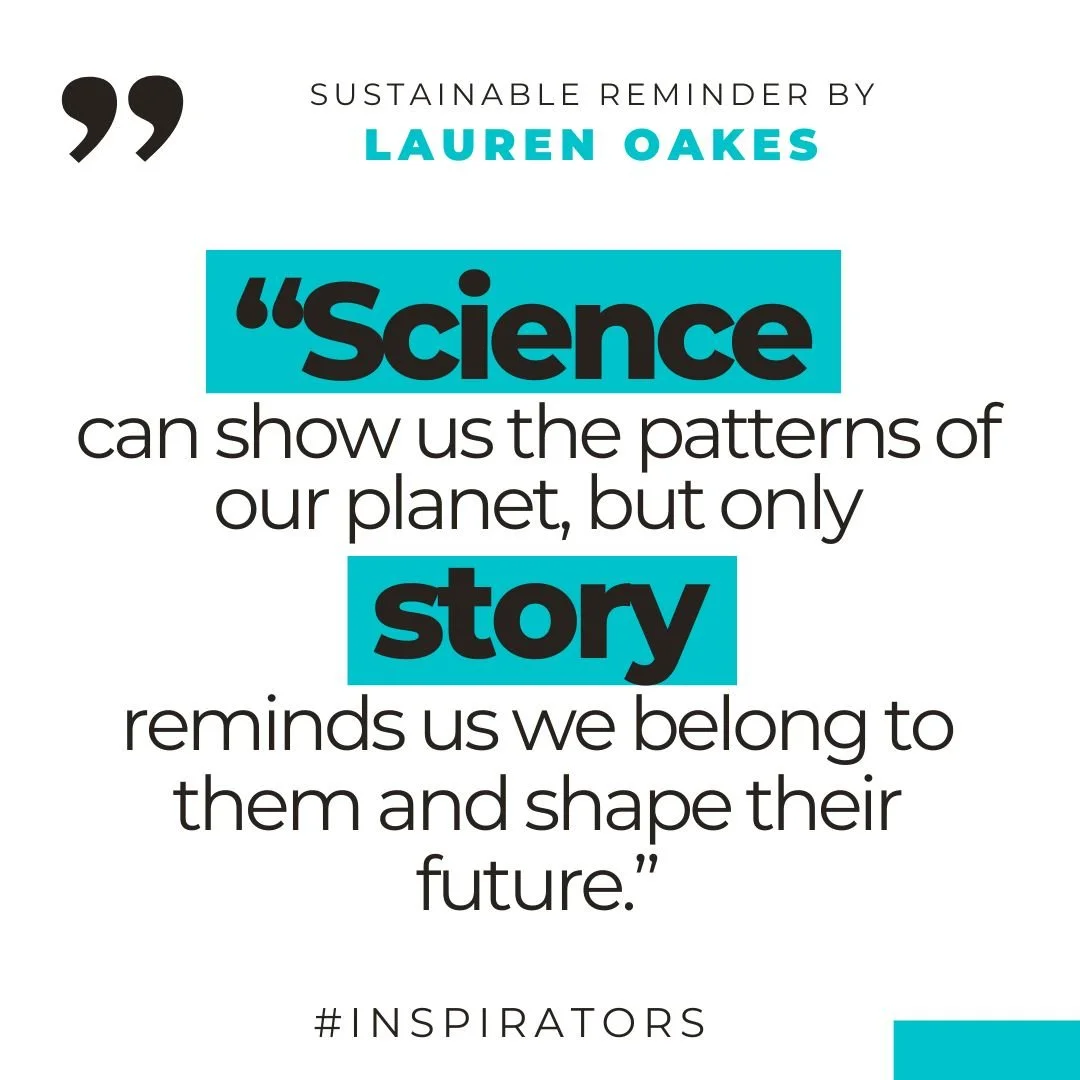
Lauren moves fluidly between science and story, research and lived experience.Science is an act of listening, and storytelling is her form of stewardship, an invitation to pay closer attention. Care sits at the centre of her book, In Search of the Canary Tree, which traces six years spent studying Callitropsis Nootkatensis, also known as yellow cypress. As climate change accelerated its decline, Lauren began to see the tree as a warning signal, like a canary in a coal mine, a metaphor that gives the book its name.
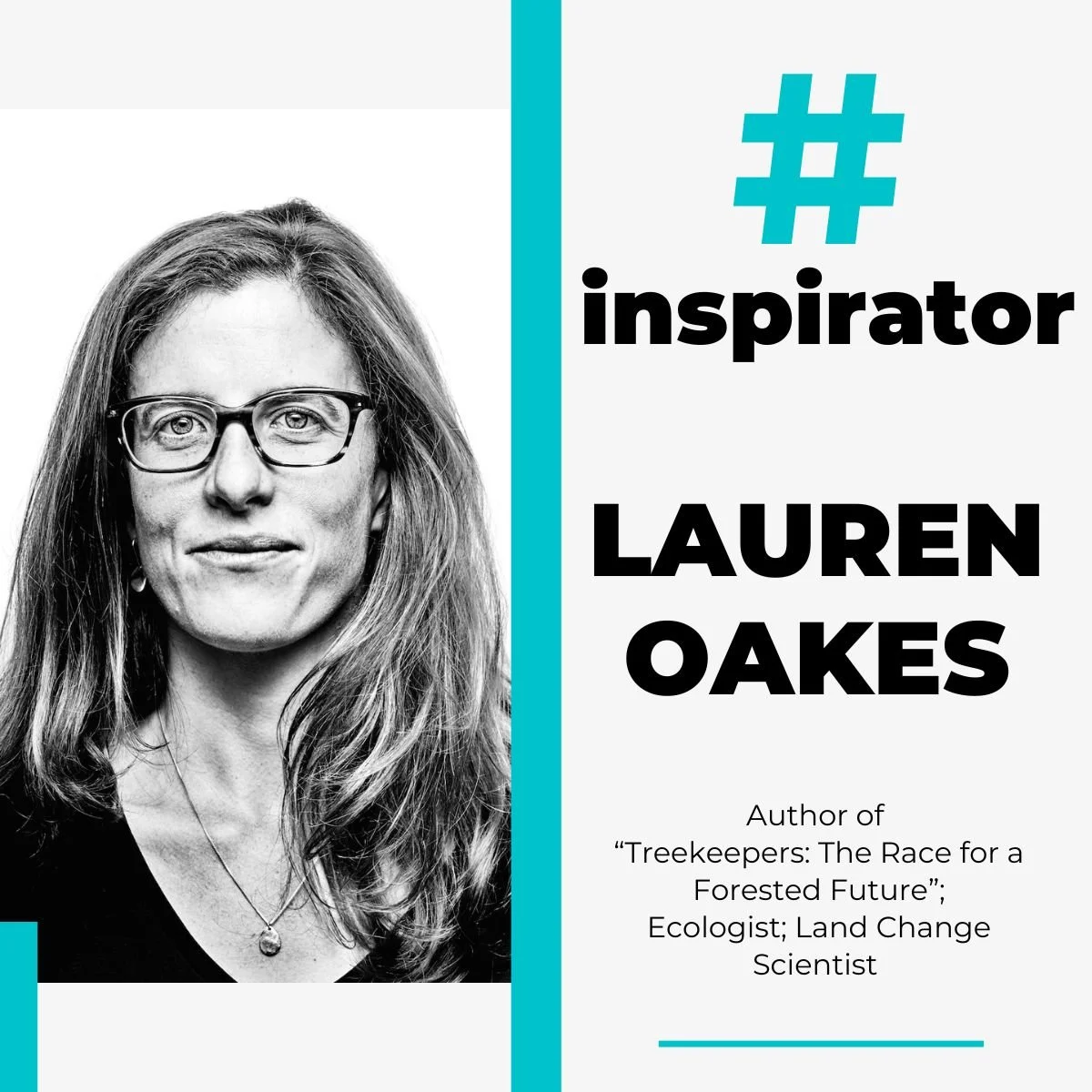
She is an author, ecologist, land-change scientist, and researcher who was affiliated with Stanford University for many years. Her writing has appeared in The New York Times and Emergence Magazine. She consults on nature-based solutions and has been developing Ground Truth for Nature, a global initiative that mobilizes communities to collect high-integrity field data in support of climate and biodiversity solutions.
Her research set out with a seemingly simple question: If one species falters, what fills the space it leaves behind? But as often happens, the deeper she went, the more the questions shifted: “What ultimately became most important for me to answer was the more philosophical question: ‘What does this tree have to teach us?’” While immersed in this work, Lauren experienced the profound loss of her own father – yet, she stayed with the discomfort, “looking for hope in a graveyard.” That courage to remain present with personal and ecological grief and pain shaped both her science and her voice: “I wanted to know what species could still thrive amidst loss and change.”
Her work also explores how deeply we feel connected to the living world. Using the Inclusion of Nature in Self (INS), a tool that examines our sense of relationship with nature, Lauren keeps returning to what that regeneration truly makes possible: care, responsibility, and humility: “In the presence of trees, I try to appreciate their beauty without wondering about their future. I fail, repeatedly. There is an element of passion and heart in any research I do, and I think that is what this warming world requires. It doesn’t make me biased; it makes me human. Time is ticking away.”
Lauren teaches us that care can be a form of rigour, and that listening, love, and courage still belong at the heart of science.
Read Lauren Oakes’s answers for Inspirators and remember that trees are not just data points. They are our teachers, ancestors, witnesses, and companions!
Thank you, Lauren, for being a Caring Scientist!
#INSPIRATORS QUESTIONNAIRE
Name: Lauren E. Oakes
Company / Institution: Self & Adventure Scientists
Title: Ecologist, land change scientist, and author
On bridging worlds - where science, story, and stewardship come together in care for the Earth
Website: www.leoakes.com
LinkedIn profile: https://www.linkedin.com/in/lauren-oakes-0b78155
Country of origin: USA
Country you currently live in: USA
Your definition of Regeneration: Regeneration is an act of reciprocity with the living world, repairing not just ecosystems but our relationships with them. It’s a return to humility, to listening, and to co-creating with nature rather than extracting from it.
Main business challenge you face: Building trust at the new frontier where technology meets ecology to improve environmental monitoring and stewardship; ensuring that the new tools for measuring nature serve the people and places they are meant to protect.
Main driver that keeps you going: A belief that stories and science, when joined with integrity, can change the systems that govern how we value and care for life on Earth.
The trait you are most proud of in yourself: Persistence wrapped in empathy, a way of seeing complexity without losing sight of beauty.
The trait you most value in others: Curiosity paired with courage. People willing to ask hard questions and constantly work toward something better, while also celebrating the present.
Passions & little things that bring you joy: Time in old forests. Handwritten notes. Laughing with friends and family around campfires. The sound of rain.
The Inspirators who determined you to take the regenerative path: Writers and scientists who refused to separate feeling from fact, and the communities on the frontlines of change who continue to teach me what resilience means.
A starting point for companies or professionals that are beginning the regeneration journey: Start by listening to the land, to local people, to what’s already thriving and what might need repair. Regeneration isn’t a framework; it’s a relationship.
Most used and abused clichés in sustainability that bother you: Language that masks extraction or assumes solutions can be imposed, rather than grown through shared stewardship. Words like “offsetting,” “capacity building,” or “impact delivery” too often overlook the power of local care and the people and places doing the restoring.
An honest piece of advice for young people who lose hope: Hope is not naïveté; it’s an act of defiance. Keep doing the small, tangible things that make life better where you stand and in your community; scale will follow.
Books that had a great impact on you / Must-Reads for any regenerative professional:
· Finding Beauty in a Broken World by Terry Tempest Williams;
· The Sense of Wonder by Rachel Carson;
· Field Notes from a Catastrophe by Elizabeth Kolbert
Movies / Documentaries you would watch all over again: Erin Brockovich, BBC and National Geographic nature documentaries.
Websites / Podcasts you visit frequently: Emergence Magazine.
Music that makes you (and your heart) sing: Bob Dylan (I grew up listening to him pretty much every Sunday morning while my Dad cooked pancakes), Gregory Ivan Izakob, Nathaniel Rateliff.
Places you travelled to that left a mark on you: The Tongass National Forest in Alaska, where dying trees first taught me about adaptation; Panama, where efforts to plant native saplings on remote farmlands remind me that regeneration is labour and love. Suriname, where walking through intact and biodiverse forests felt like stepping into the heart of the planet.

Global Regenerative Voices you recommend us to follow:
· Robin Wall Kimmerer - Ecologist and author bridging Indigenous knowledge and Western science (Braiding Sweetgrass);
· Paula Kahumbu - Kenyan conservationist and storyteller leading WildlifeDirect, amplifying African voices in global conservation;
· Ayana Elizabeth Johnson - Marine biologist and co-founder of The All We Can Save Project;
· Daniel Christian Wahl - Systems thinker and author advancing regenerative design and living systems leadership worldwide;
· Vivek Maru - Founder of Namati, advancing legal empowerment and community rights as foundations for ecological stewardship.
Trends in Regeneration we should keep an eye on: Co-governed data ecosystems, field-verified biodiversity credits, and the rise of local-to-global networks restoring accountability in nature markets.
Events we should attend / Best places for networking (online or offline): Climate Week NYC (especially the nature and circular economy tracks), events hosted by The Nature Tech Collective, Global Landscapes Forum, and IUCN’s World Conservation Congress.
Impactful and relevant Sustainable Development or Regeneration courses or certifications:
· Stanford Continuing Studies - Storytelling in Science (crafting narratives that bridge data, empathy, and impact; teaching course in Jan/Feb of 2026);
· IUCN Academy - Green List and PAME Frameworks (training in protected-area management effectiveness and governance);
· Common Earth - Systems Thinking and Regenerative Leadership Program (UNDP-aligned course exploring planetary wellbeing).
Reasons to feel optimistic about our future in 2030: The next generation’s fluency in systems thinking and increasing refusals to accept false separations between economy, ecology, and equity. A growing push for a “nature positive” economy.
Reasons to feel pessimistic about our future in 2030: Because true restoration takes time, and we still chase quick fixes when we’re pressed against the limits of climate and biodiversity collapse.
Regenerative Leadership qualities much needed today: Integrity, patience, and the courage to listen deeply when speed is too often mistaken for progress.
The Inspirator(s) you are endorsing for a future edition:
· Liz Carlisle
· Elsa Ordway
· Vivek Maru
The quote that inspires you:
“Attention is the beginning of devotion.” (Mary Oliver)
Your quote that will inspire us: