
Jonathan Balcombe
on Ethology and the Inner Lives of Animals
“To hyenas, spiders, bats, snakes, scorpions, and all the other beings deemed foul and loathsome - this one’s for you!”
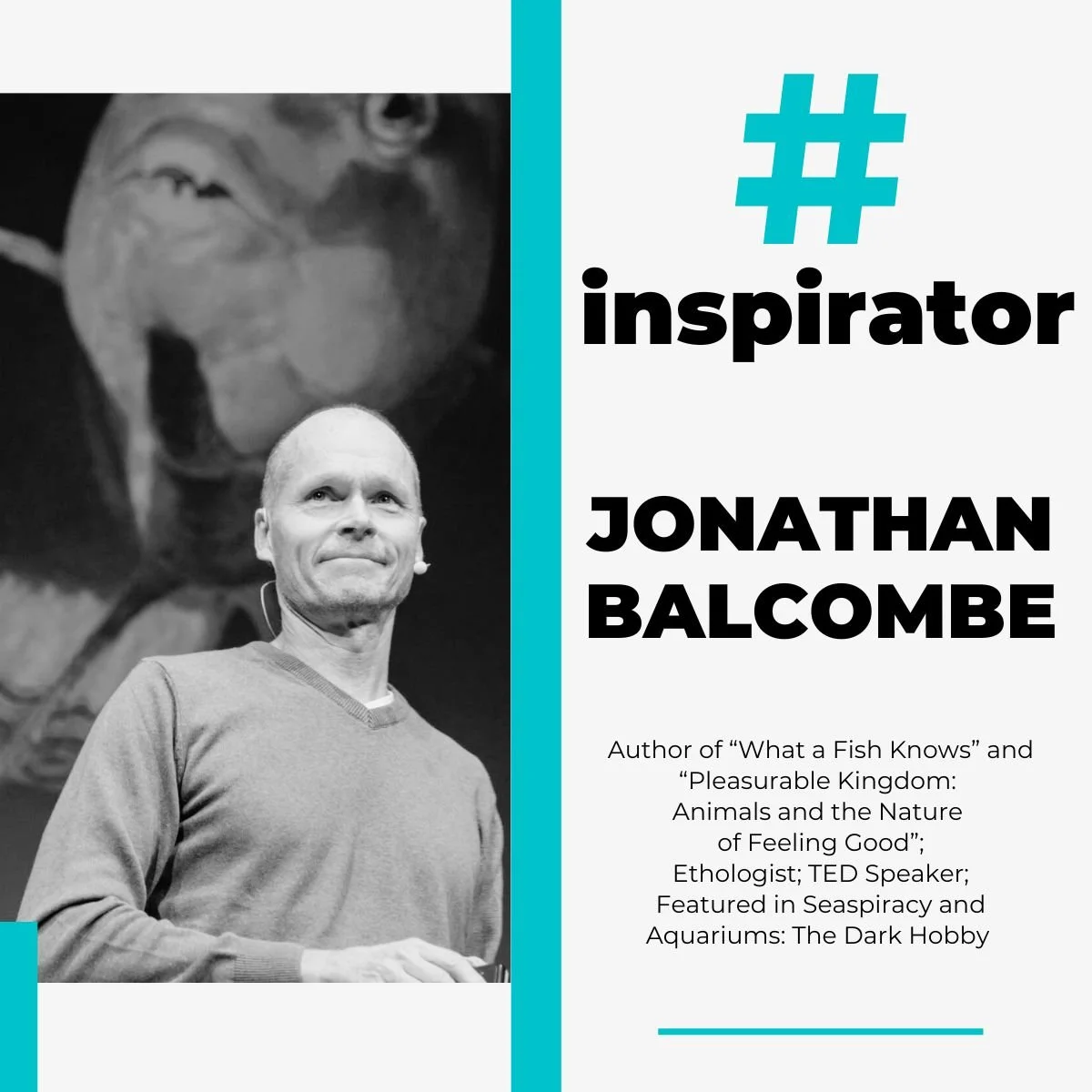
Jonathan Balcombe’s fantasy is simply extraordinary: to become an animal, just for a day, and experience life from their perspective.
It makes total sense, as he’s an ethologist, speaker and author of many science books on the inner lives of animals, including Super Fly and What a Fish Knows.
As a child, he was already acting as an ethologist long before he knew the word. He always felt alienated from other kids who would squash insects beneath their feet: “I felt they were more alien to me than the little creatures they were killing! I’ve always been completely smitten and enamoured by all animals, with no exceptions, even mosquitoes or flies that wanted to bite me, and even parasites. I have a level of respect and fascination for them.”
But what happens to this innate closeness with non-humans? In our fast-paced, human-centered lives, we become oblivious to the remarkable capacities of other species. Jonathan believes much of this is learned behaviour. If children grow up witnessing care and compassion toward animals, that way of seeing the world organically follows. Yet our own false sense of human superiority leads us to devalue these beings we call “others” who seem so foreign to us!
However, Jonathan’s close observations of studying animals reinforced what he had long held to be self-evident: animals feel! They experience emotions, they are sentient, living rich sensory lives of hardships and rewards, not so different from our own.
As he likes to joke, “Sentience is like pregnancy. You’re either pregnant or you’re not. If an animal is sentient, meaning it has awareness and the capacity to feel pain and pleasure, then it has moral traction. It is deserving of consideration. They can have good days and bad days. And this is the bedrock of ethics.”
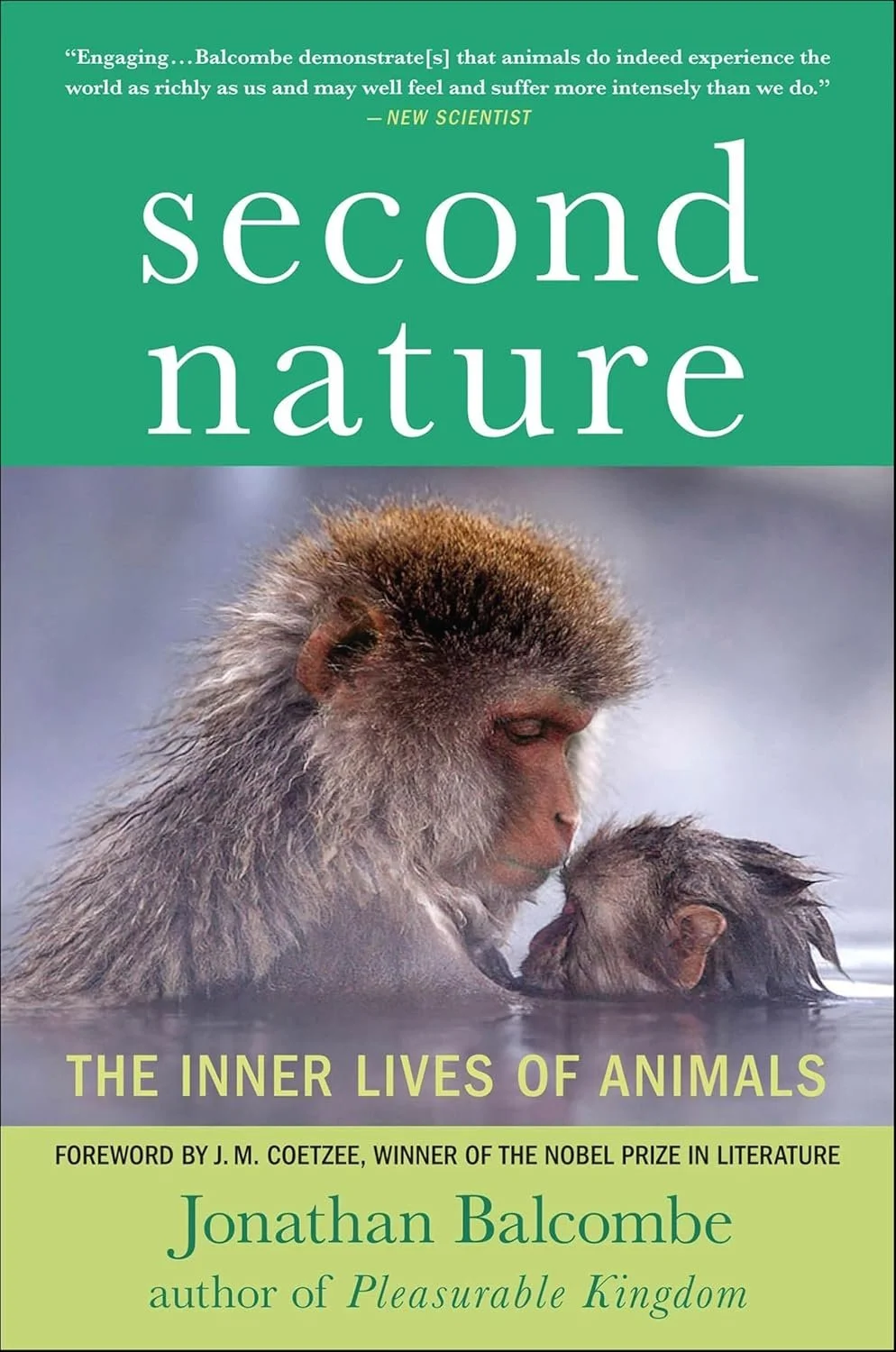
When we begin to make choices with compassion and care for how they affect others, Jonathan calls this Second Nature. Biophilia describes the connections human beings unconsciously seek with the rest of life – and Jonathan thinks it’s a beautiful concept, this natural love for life that we may feel for a forest, the sound of ocean , the open sky, or a butterfly.
Second Nature is conscientious biophilia: “It’s when we extend our affinity for nature to non-humans, recognizing that they have lives of value and that they want to live as much as we do!”
Read his answers for Inspirators and remember: “Morality didn’t originate with humans, but acute moral awareness is one of humankind’s greatest achievements. It is also one of our heaviest burdens.”
Thank you, Jonathan, for being a Spokesperson for Animals!
#INSPIRATORS QUESTIONNAIRE
Name: Jonathan Balcombe
Title: Biologist and Author
Website: jonathanbalcombe.com
LinkedIn profile: www.linkedin.com/in/jonathan-balcombe-95639b181
I rarely use LinkedIn. I have a greater presence on Facebook and on ResearchGate
Country of origin: England
Country you currently live in: Canada
Your definition of Regeneration: The promise and persistence of life in the face of anthropogenic adversity.
Main business challenge you face: Motivating people to stop funding animal agriculture by purchasing its products.
Main driver that keeps you going: Knowing that animals are sentient!
The trait you are most proud of in yourself: A passionate belief that we can make the world better than it is now.
The trait you most value in others: Open-mindedness.
Passions & little things that bring you joy: Insects, wildlife, vegan food.
The Inspirators who determined you to take the regenerative path: My parents.
A starting point for companies or professionals that are beginning the regeneration journey: Have your cardinal aim be to make the world better for all. Practice the golden rule: do unto others as you would have them do to you!
Most used and abused clichés in sustainability that bother you: “Harvesting” animals; “sustainable use”.
An honest piece of advice for young people who lose hope: Never doubt that you can change the world, even if it’s just a small piece of your surroundings. As individuals, we can affect immediate change simply by changing what we eat.
Books that had a great impact on you / Must-Reads for any regenerative professional:
· Animal Liberation by Peter Singer
· Les Misérables by Victor Hugo
Movies / Documentaries you would watch all over again: 2001: A Space Odyssey; Flow.
Websites / Podcasts you visit frequently: YouTube (especially for music while I write); The Animal Law Podcast; Population Overshoot.
Music that makes you (and your heart) sing: Anything by JS Bach; Kaki King; Donald Fagen; Bruce Cockburn.
Places you travelled to that left a mark on you: India (1984, 2007), South Africa (1962, 1985, 2008), Japan (1991, 2000), Costa Rica (1993), Belize (2023).
Global Regenerative Voices you recommend us to follow:
· Melanie Joy (Beyond Carnism)
· Bruce Friedrich (The Good Food Institute)
· Camille Labchuk (Animal Justice)
Trends in Regeneration we should keep an eye on: Ongoing scientific revelations about animal sentience. The rise of plant-based and cultivated meats.
Reasons to feel optimistic about our future in 2030: The possibility that the human population begins to decline due to falling birth rates. The potential that the availability of alt-meats (made without animals) will become widespread and cheaper than conventional meat. More marine sanctuaries; [there are so many more!]
Reasons to feel pessimistic about our future in 2030:The possibility that human numbers continue to rise [there are so many more!]. Projected rise in human meat consumption. Wildlife continues to drop from its already low current level (4%, compared to humans 36% and livestock 60%).
Regenerative Leadership qualities much needed today: Inclusivity, positivity, persistence, compassion.
The Inspirator(s) you are endorsing for a future edition:
· Melanie Joy
· Bruce Friedrich
· Paul Shapiro
· Camille Labchuk
· Peter Singer
The quote that inspires you:
“The arc of the moral universe is long, but it bends towards justice.” (Martin Luther King)
“The only way to live is to let others live.” (Gandhi)