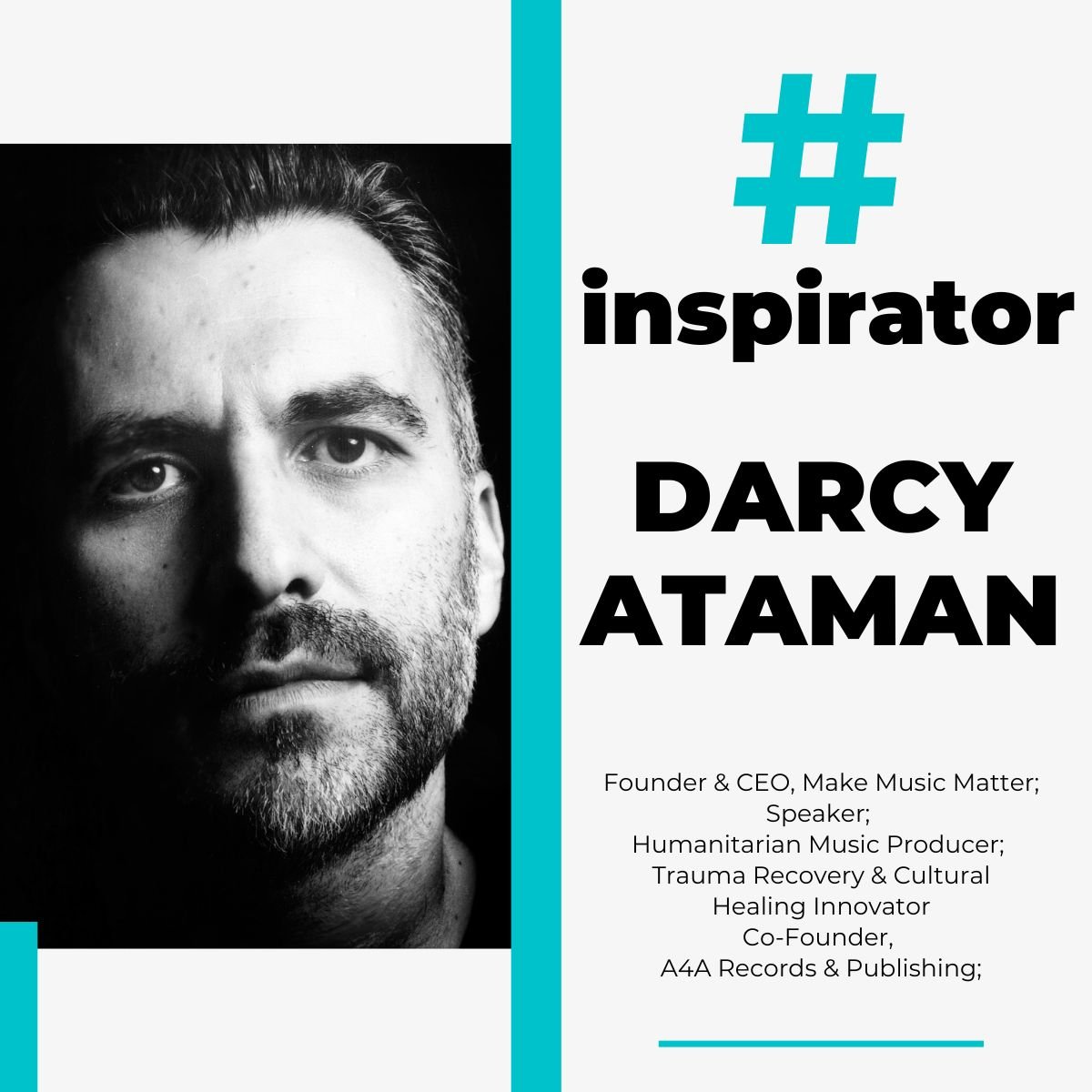
Darcy Ataman
on Music as Therapy for Conflict and Trauma
Music is “the last thing someone could take away from you.”
It doesn’t cost a thing. Shape a few lyrics in your head and let a song emerge to express what you carry inside. In the most fragile days, that small act of creation can be cathartic. If you’re in a hospital bed, if your home has been destroyed, if everything you once knew has collapsed, you may feel you have nothing left. But expressing yourself through music can never die.
It’s Darcy’s pure truth about survival. He has seen the healing power of music in so many parts of the world – the Democratic Republic of Congo, Ukraine, Syria and Iran. Despite the cultural differences, he noticed the same pattern everywhere, a red thread running through these communities shaped by hardship: “Music is the one thing people hold on to no matter what to get up in the morning. That makes it an entry point to so much work civil society can do.”
He’s now bringing an alternative form of music therapy to survivors of conflict and trauma through Make Music Matter: “I was ignored and laughed at when I came up with this idea.” Still, he trusted what he had seen in the field. The evidence caught up with his intuition: music-based therapeutic interventions were the most effective ways for survivors to process trauma.
Darcy’s origin story is also organic. Although a psychology graduate, his career began in music production: “I was once in Rwanda filming a documentary, so I organized a recording session for village children to spend a day making music.” What happened next surprised everyone: “The school was packed! Most of the kids handed sheets of paper with lyrics they had written themselves.” They told stories impossible to ignore: “The songs spoke about HIV/AIDS, others described the painful reality of girls pressured to sell their bodies! They simply wrote what was on their minds.” Music was the most acceptable way to express taboos.
Healing in Harmony, the program he co-developed with Nobel Peace Prize laureate Dr. Denis Mukwege, supported more than 19,000 individuals across 9 countries. The process itself is carefully designed to address trauma while avoiding the stigma that often surrounds therapy: “We interject CBT in a way that’s not noticeable, so people don’t come in thinking they are coming for therapy. They come in for art.”
For many survivors, directly discussing what they experienced can reopen wounds. Music offers another path: “Metaphor and writing help get overwhelming experiences out of their heads without retraumatizing the brain! Our outcome is healing. Our output is music.”
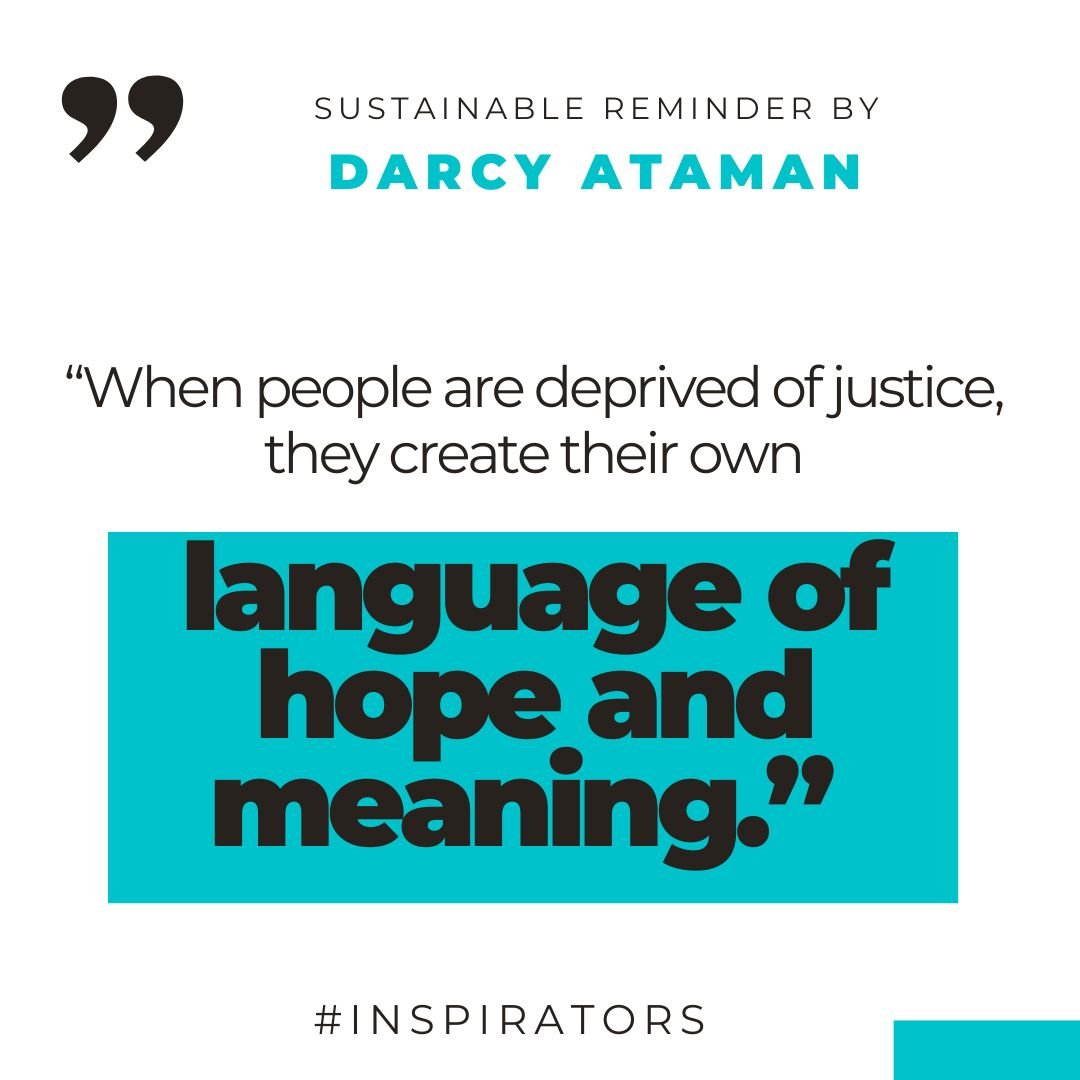
Darcy sees this as a sort of symbolic graduation: “Shame is gone, agency is back. Owning your story changes the way the community sees you.”
Read Darcy Ataman's answers for Inspirators and never forget about music’s ability to re-stitch the soul!
Thank you, Darcy, for being a Music Therapist!
#INSPIRATORS QUESTIONNAIRE
Name: Darcy Ataman
Company / Institution: Make Music Matter
Title: Founder and CEO
Website: www.makemusicmatter.org
LinkedIn profile: https://ca.linkedin.com/in/darcy-ataman-m-s-c-o-m-b28672b8
Country of origin: Canada
Country you currently live in: Canada
Your definition of Regeneration: Regeneration means to metaphysically view oneself as a butterfly, continually dying, then flying.
Main business challenge you face: To convert interested stakeholders into donors.
Main driver that keeps you going: 10 years of seeing the Healing in Harmony model create miracles in the field.
The trait you are most proud of in yourself: Tenacity.
The trait you most value in others: Kindness.
Passions & little things that bring you joy: Going to my favourite record stores.
The Inspirators who determined you to take the regenerative path:
Dr. Denis Mukwege
A starting point for companies or professionals that are beginning the regeneration journey: Again, now Nobel Laureate, Dr. Denis Mukwege!
Most used and abused clichés in sustainability that bother you: The need to prove sustainability in International Development.
An honest piece of advice for young people who lose hope: History does not have the time or space to note everyone in a generative change. There is only room for the flashpoints, Dr. King, Rosa Parks, etc., not the countless community-based groups and grassroots organizations that led to that flashpoint moment.
Books that had a great impact on you / Must-Reads for any regenerative professional:
The Power of Myth by Joseph Campbell
Movies / Documentaries you would watch all over again: The Darkest Hour, The Defiant Ones, Shangri-La, Never Sorry, Morbid Curiosity.
Websites / Podcasts you visit frequently: Tetragrammaton.
Music that makes you (and your heart) sing: Creating art.
Places you travelled to that left a mark on you: Ukraine; The Democratic Republic of the Congo.
Global Regenerative Voices you recommend us to follow:
Dr. Denis Mukwege
Ai Weiwei
Events we should attend / Best places for networking (online or offline): Live Loud Live 2026.
Reasons to feel optimistic about our future in 2030: The rebirth of protest and advocacy in the Global North.
Reasons to feel pessimistic about our future in 2030: Peace is rarely a cessation of arms but a realignment of political and economic interests.
Regenerative Leadership qualities much needed today: Embodying resilience.
The Inspirator(s) you are endorsing for a future edition:
Caitlin Morrison
The quote that inspires you:
“There is no greater agony than bearing an untold story inside you.” (Maya Angelou)
Your quote that will inspire us: